Premature Evaluation: Pusha T It’s Almost Dry
G.O.O.D. Music/Def Jam
2022
BY
TOM BREIHAN
Once upon a time, the alliance between Pusha T and Kanye West made perfect sense. Clipse were critically and cultishly beloved — hard and literary rappers’ rappers who could lovingly describe street economies with verve, specificity, and mordant humor. After their first album, though, Clipse got themselves trapped in record-label hell and struggled to connect commercially. Kanye West, meanwhile, lived a commercially charmed life, but he always radiated little-brother tendencies. He wanted to be known as one of the world’s best rappers, but even the critical praise of Kanye had to mention every try-hard clanger of a punchline. Clipse were cool, and they wanted to be successful. Kanye was successful, and he wanted to be cool — or cooler than he already was, anyway. When Clipse and Kanye first came together to quote
Anchorman, they seemed to be approaching the collaboration from opposite angles.
Shortly after the release of that 2009 collaboration, Pusha’s brother Malice found religion, changed his name to No Malice, and decided that he didn’t want to be a part of your coke-rap genre. Pusha, on his own for the first time, joined Kanye West’s G.O.O.D. Music empire when it was first becoming a force. Suddenly, Pusha’s record-label troubles were gone, and he immediately jumped into a higher-profile plane of existence, excelling whenever he got a chance to shine. Kanye West, meanwhile, got to take on some credibility from teaming up with a certified rap monster whose aesthetic aligned with his own. (Kanye also got access to some great ghostwriting; Ab-Liva, once part of Clipse’s extended Re-Up Gang crew, has writing credits on many of the best Kanye tracks of the past decade.) From all accounts, Kanye and Pusha are close friends, but theirs was also a mutually beneficial relationship.
In his first few albums for G.O.O.D. Music, Pusha struck a balance between the cold, calculated precision of Clipse’s classic mid-’00s mixtapes and the demands of an evolving market. With Kanye’s imprimatur, Pusha could work with big stars — Kendrick Lamar, Future, Chris Brown, Rick Ross — and bring them into his world. Those records never turned Pusha into a commercial behemoth like Kanye, but they gave him a niche. If you loved rap music, you simply had to acknowledge Pusha as a master of his craft. Around the same time that Kanye West started his spiral into ignominy, Pusha reached his public-life pinnacle, launching into a feud against the biggest star in all of rap and
brutally, decisively winning. That same summer, Kanye produced all of Pusha’s brief, hellacious album
Daytona, which worked as proof that Kanye West, for all his considerable faults, could still make cold-blooded rap music, especially if he had Pusha T with him.
Four years on from
Daytona, it’s less and less clear that Pusha’s Kanye association is doing him any favors. Kanye is still one of the richest, most famous people in all of music, but his public life is a series of increasingly gaudy car wrecks, and music barely ever seems like his focus anymore. Pusha has always seemed relatively comfortable within that whole circus, but his reputation as a rapper is immaculate, and he needs Kanye West less than he ever has. That ever-changing power balance is one of the most fascinating things about
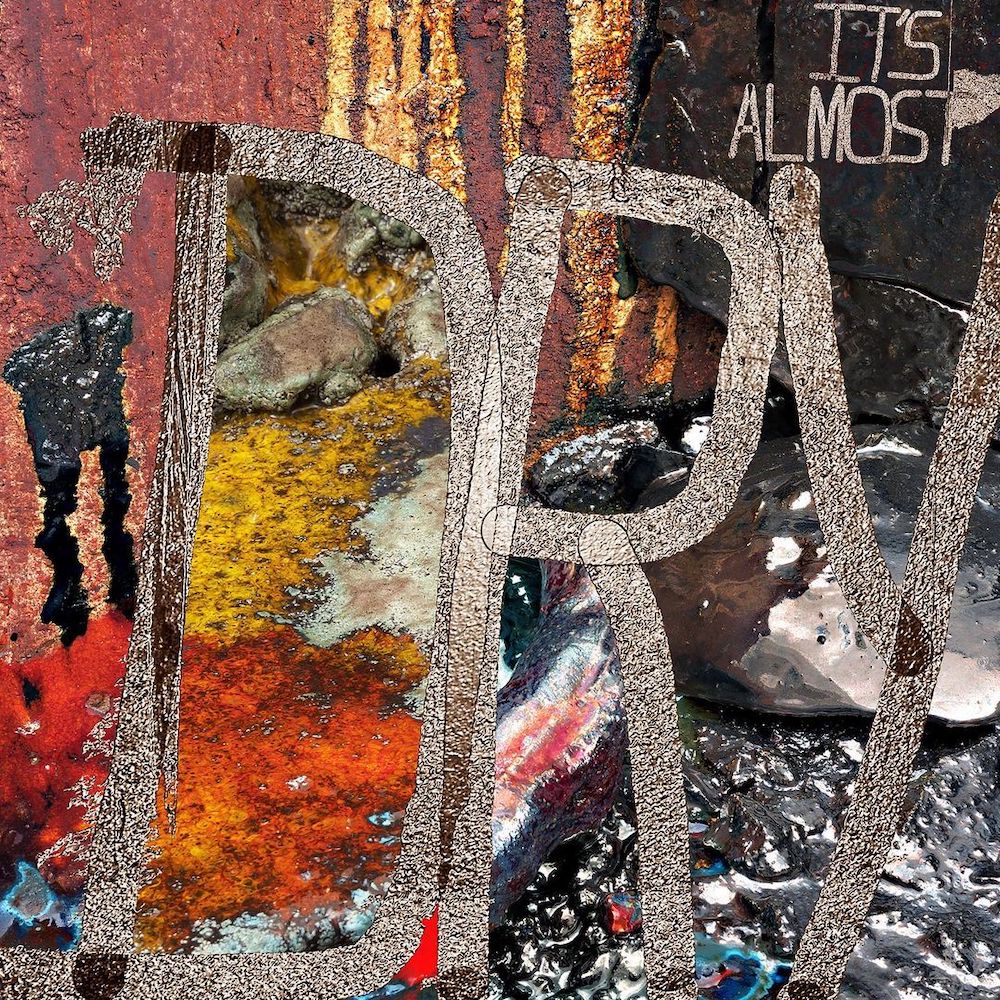
It’s Almost Dry, the new Pusha T album that’s out today, just a few days after Pusha announced its existence.
To hear Pusha tell it,
It’s Almost Dry is a work borne out of competition. Kanye West produced (or, more accurately, co-produced) roughly half of the album, and the other half came from Pharrell Williams, Pusha’s first rainmaker. Clipse got their start on the Neptunes’ Star Trak label, and the Neptunes produced all of the first two flawless Clipse albums. For
It’s Almost Dry, Pusha worked closely with both Kanye and Pharrell, playing them off of each other and pushing them to outdo each other. This process apparently took a while; in
a recent tweet-and-delete statement, Kanye’s estranged collaborator Kid Cudi says that he recorded his appearance on “Rock N Roll” a year ago. (Cudi also says that he’s cool with Pusha but not with Kanye. Some of us can relate.) The result of that process is a quick, nasty record that coaxes some of the best work out of these two aging super-producers that we’ve heard in years.
Make no mistake:
It’s Almost Dry is very much a Pusha T album. That means he spends most of the brief running time reflecting on his drug-dealing memories, luxuriating in his escape from poverty, and expressing infectious disgust for anyone unable to make it the way that he made it. Pusha frames his own magnificence in mythic terms. (On one unnamed clueless associate: “Had a million answers, didn’t have a clue/ Why Michael kissed Fredo in
Godfather II.”) This is nothing new. Really, there’s not much new about the album. Pusha toys around with a few different flows, but there are no radical digressions. Pusha is here to talk his shit, and he no longer has the urgency of youth or of a looming feud with a rap titan. Instead, he’s speeding happily within his own lane, never running any risk of crashing. He’s doing what he does, and he knows it: “Like Brady, gets better with time/ Didn’t have to reinvent the wheel, just a better design.”
But the design
is great. Pusha is still rapping about coke in the ceiling and hidden chambers in the back of a bodega, but he’s probably better at rapping about those things than anyone, ever. Pusha’s been treading this ground for 20 years, and he hasn’t worn it out yet. There are moments on
It’s Almost Dry where I wonder if Pusha should find a new concept, a new idea. It’s not exciting, for instance, for Pusha to be displaying a weary, just-OK Jay-Z verse as a status symbol on “
Neck & Wrist.” But every time Pusha’s approach starts to feel tired, he comes up with a line that forces me to make involuntary ugly faces: “Kilogram Kickstarter push a brick harder/ Left my elbow in the pot a la Vince Carter.”
Pusha really does get great work out of both Kanye and Pharrell, too. On “Just So You Remember,” for instance, Kanye and co-producers BoogzDaBeast and FNZ build a spacey, ghostly track out of Colonel Bagshot’s eerie anti-war 1971 psych-rock lullaby “
Six Day War,” the same track that DJ Shadow once used as the basis for “Six Days.” Pusha uses that ominous float to ruminate vengefully: “Just so you remember who you dealing with/ The purest snow, we selling white privilege.” (I can’t believe Pusha is still finding ferociously poetic ways to describe selling cocaine, but he’s doing it.) Elsewhere, Kanye reverts to his old soul-sample self, and he gets off at least one great bar: “I used to watch the
Fresh Prince and pray the house would be mine/ Coulda bought it, but I ain’t like the way the kitchen designed.”
But the Pharrell tracks are where the album truly comes alive. Those beats don’t sound like the funky, playful Neptunes beats that Pusha used to routinely annihilate. Instead, they’re sparse and sinister and
mean. Pusha has said that he and Pharrell went to work early every day on Pharrell’s compound, repeatedly watching
Joker for inspiration: “If the music didn’t feel that evil, if it didn’t have that character, we didn’t use it.”
Joker is a terrible movie, but if it got Pusha and Pharrell into the right headspace, then maybe the film has justified its existence. Whatever it took to bring those old friends into that alignment, it’s worth it. At his best, Pharrell uses empty space better than almost any other producer in rap history, and Pusha uses that empty space to project gleeful malevolence: “You know the type, always tryna get in your picture/ I was tryna get the dope through in your sister.”


 www.stereogum.com


