
Follow along with the video below to see how to install our site as a web app on your home screen.
Note: This feature may not be available in some browsers.



 www.thedrive.com
Ominous Israeli surveillance tech is now being deployed on American roads. FalcoNet, brought to you by a company called Cognyte (Israel’s Palantir rival), secretly tracks people by intercepting the connection between your phone and the nearest cell tower. The idea is that you can strap this bad boy to a helicopter, backpack, or Chevy Tahoe and gobble up everybody’s data as you cruise around. It’s already in use in Florida. This year, Texas State Police bought a little fleet of FalcoNet-equipped SUVs for just under $4.5 million. I found the purchase receipt and FalcoNet user guide to learn a little more about it.
In March of 2026, the Texas Department of Public Safety (DPS) Criminal Investigations Division asked for approval to spend $4,487,500 on a Cognyte surveillance setup. Actually, what they requested was “approval for emergency purchase necessary to protect the safety and welfare of state personnel and property. Delaying the procurement process could result in unacceptable safety risks to personnel and compromise operational readiness.”
The request memo is chock-full of urgency and dramatic language—peppered with terms like “emergency” and “immediate.” But no specifics are mentioned. “Any delay in procuring would compromise employee safety, public safety, operational readiness, and overall mission success,” the memo states, without saying how or why this brand-new, very expensive technology is suddenly essential to operations.
Naturally, it wasn’t just $4.5 million for four 2026 Chevy Tahoes, though the SUVs themselves were still bizarrely expensive at $150,000 a piece. Here’s how the purchase order breaks down:
So, yeah, that’s how (and why) Texas police spent $4.5 million on four Tahoes. They’re bristling with really expensive peeping equipment.
- FalcoNet Core System (x4): $2,850,000
- Unlicensed FalcoNet core system: $200,000
- Delta 5G Perpetual license for FalcoNet V (x4): $280,000
- 2026 Chevrolet Tahoe (x4): $600,000
- FalcoNet Backpack core V2 – 6 x BTS (2G/3G/4G/5G): $355,500
- Flexable [sic] antenna kit: $27,000
- Cognyte PA Ranger: $105,000
- Unlicensed FalcoNet Backpack core V2 – 6 x BTS (2G/3G/4G/5G): $70,000
- Total PO Amount: $4,487,500
As for the FalcoNet system itself, the core principle people are rightfully freaking out about is the fact that it can hoover up private data from unsuspecting people en masse and in secret. I don’t consider myself a person with anything to hide, but I still hate this with a passion. Just the other day, a member of our very own staff was wrongfully detained by corporate-controlled cop tech!
And as Cybernews pointed out, the legality of such things is still questionable. In fact, the Supreme Court ruled (Chatrie v United States) “that people have a reasonable expectation of privacy in location data revealing their movements, and that even short-term tracking of that kind counts as a search under the Fourth Amendment.”
We have been and will continue to cover the rapidly evolving corpo-surveillance state we’re all driving around in, because it affects infrastructure and road travel (driving) in such a major way.
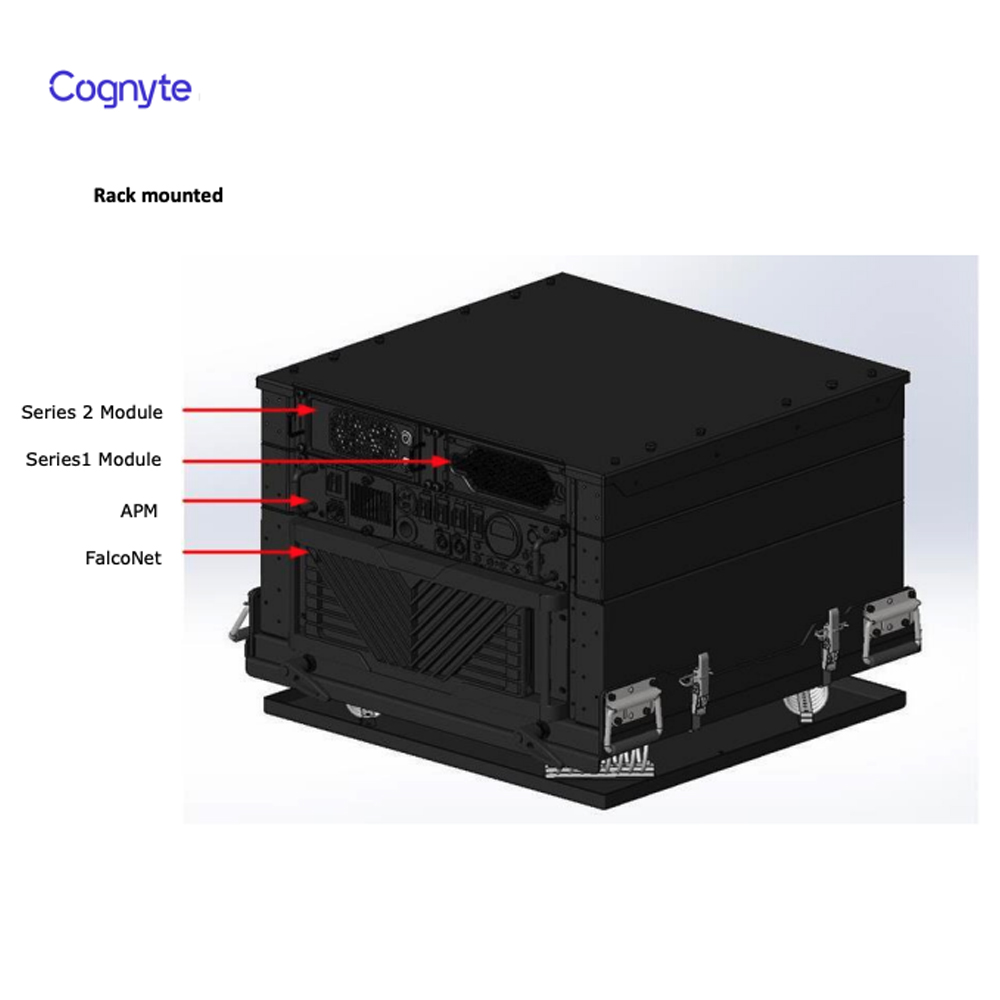 FalcoNet hardware Cognyte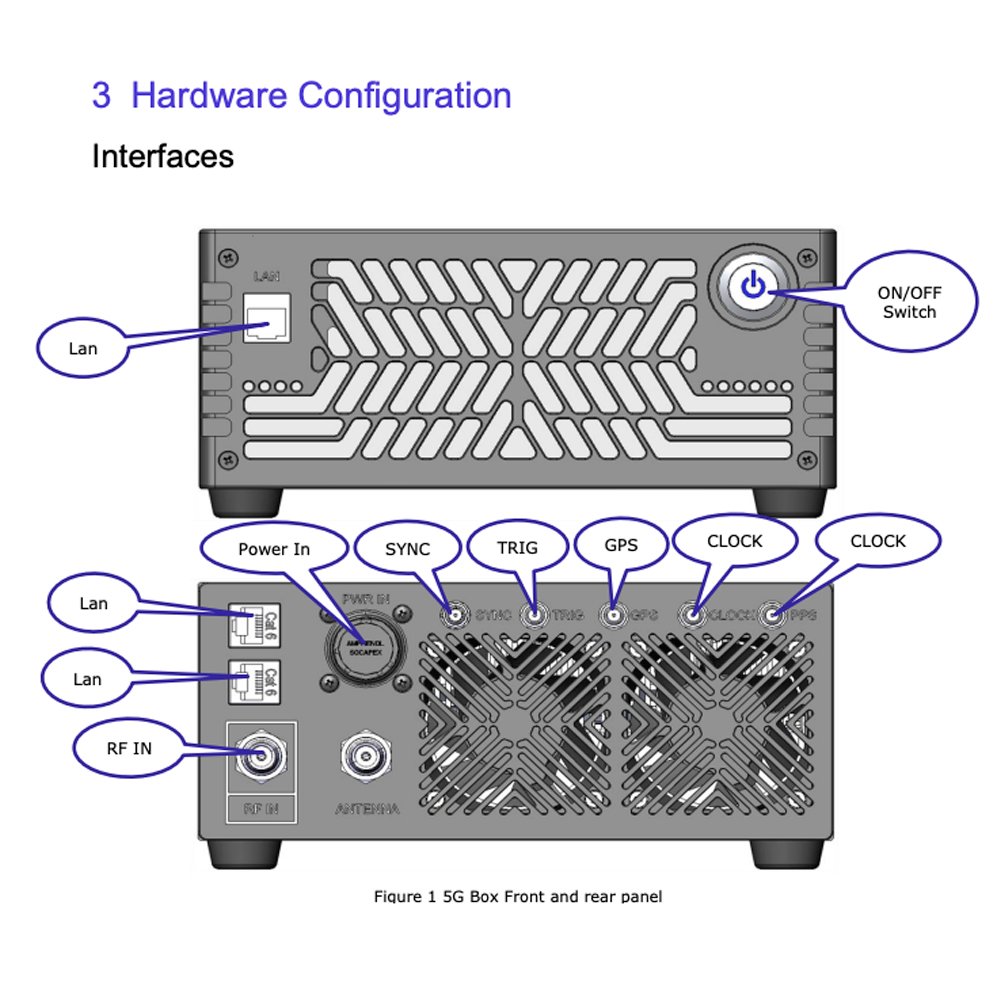
But we can also get into the specifics of this technology, too, since I found the FalcoNet user guide and thought you might be curious about how it works exactly. GM has a standard cop loadout for the Tahoe: Tahoe Police Pursuit Vehicles come with a V8, big brakes, robust suspension, secondary battery, and 250-amp alternator.
The FalcoNet system itself breaks down thusly:
From the outside, I suspect these Tahoes will look pretty regular. Standard antenna-hiding tactics include making a slightly raised false roof, hiding them in what looks like a Thule ski box, or using little pucks. But for $4.5 million, I’m sure Cognyte will be able to make these SUVs look as scary or nondescript as Texas DPS wants.
- Dimensions & Form Factor: The core module measures 563mm x 200mm x 86mm (designed as a 2U half 19” rack drawer) and weighs 8kg.
- Hardware Interface: The module features RJ45 LAN ports, a 4-way Amphenol Power connector, SMA panel connectors for GPS and clock synchronization, and QN-Type connectors for RF input and antenna output.
- Power: It requires a DC power input of 24v to 36v, drawing about 35 watts at idle and 260 watts at full power transmission.
- Kits: Government purchase orders (such as one from the Florida Department of Law Enforcement) show that the system is modular and sold in “Deployment Kits” packaged in SKB Pelican cases containing the core Software Defined Radio (SDR) base stations, power distribution units, and directional antenna kits