Follow along with the video below to see how to install our site as a web app on your home screen.
Note: This feature may not be available in some browsers.


 jalopnik.com

 www.thebignewsletter.com
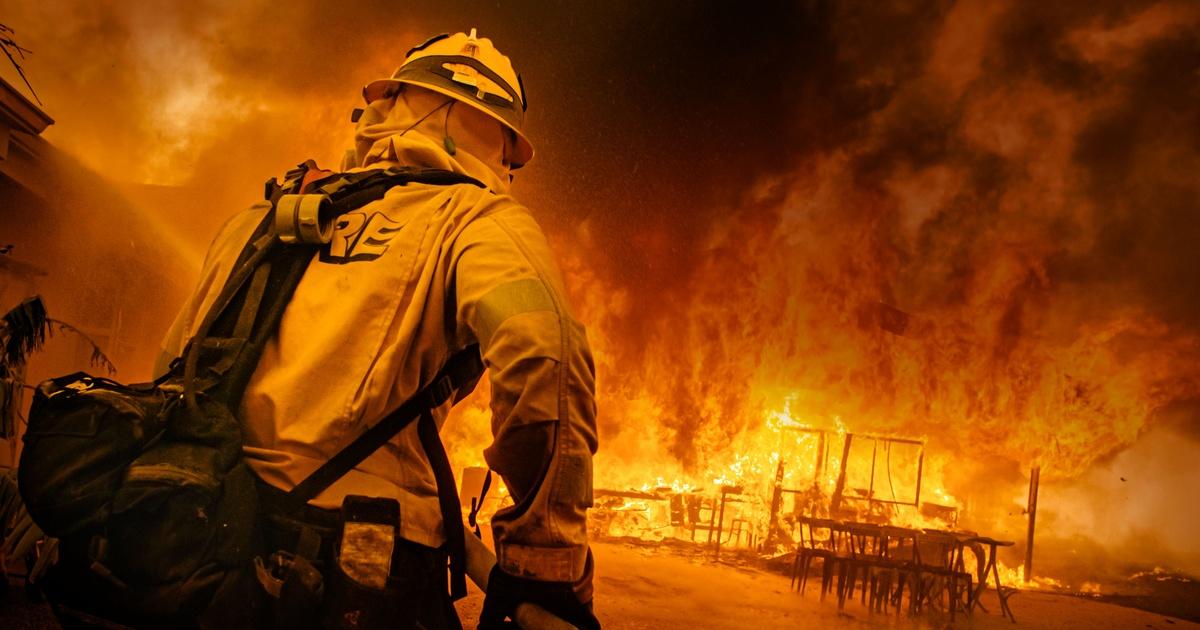
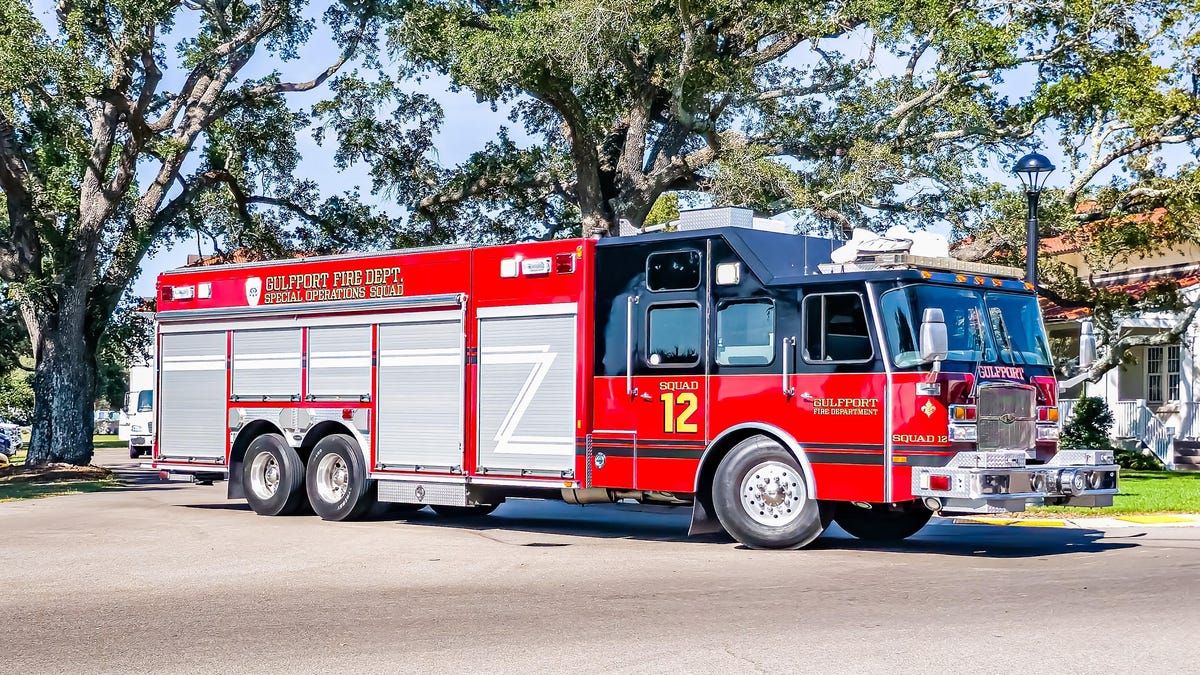
One of the reasons that the recent Los Angeles wildfires were so hard to contain, according to Los Angeles Fire Department (LAFD) Chief Kristin Crowley, is that more than half of the LAFD’s fire trucks have been out of service. It’s become a bit of a scandal; while fires burned through Palisades and Eaton neighborhoods, more than 100 of the LAFD’s 183 fire trucks were apparently sidelined.
Why couldn’t the LAFD keep its equipment in working order? A lot of people blame budget cuts, but there’s another root issue - increasing prices and metastasizing production delays for these vehicles. The cost of fire trucks has skyrocketed in recent years––going from around $300 -500,000 for a pumper truck and $750-900,000 for a ladder truck in the mid-2010s, to around $1 million for a pumper truck and $2 million for a ladder truck in the last couple years. Meanwhile, the time it takes to get a fire truck delivered has grown dramatically, from less than a year before the pandemic to anywhere between 2 and 4.5 years today. (It’s not just trucks, all fire equipment is increasing quickly in price, from air supply packs to maintenance contracts.)
The skyrocketing prices and longer delivery times have made it difficult for the LAFD to replace aging vehicles in its fleet, many of which have exceeded their service life. As the LAFD’s vehicles have gotten older, they’ve become prone to more frequent and serious breakdowns, leading to more costly repairs and prolonged downtime. And as the rising cost of fire-truck maintenance and replacement has squeezed the department’s budget, it has had fewer resources for recruiting and retaining firefighters. Against this backdrop, the LAFD wound up having to face some of the worst fires LA has seen in a century while both understaffed and under-equipped.
What I’ll show you in this piece is that the increasing price is a result of a private equity firm, American Industrial Partners, consolidating the fire truck industry and forcing up prices across the board. For decades before the 2010s, the fire apparatus industry was characterized by relatively stable (inflation-adjusted) prices and ample production capacity.
Then, however, AIP bought multiple fire-truck manufacturers and rolled them up into conglomerate called the REV Group. Although AIP initially made a show of allowing these manufacturers and their distributors to continue operating independently, under the surface it quickly moved to operate them as a single firm, like a food conglomerate selling a bunch of different brands that all appear to be different companies. As one industry executive has observed, “There are now times when all vendors at a bid table, each with a ‘different’ product, are all owned and managed by the same parent company. How is that competitive for the purchaser?” The answer, of course, is that it isn’t. And you don’t need to take my word for it. REV Fire Group Vice President of Sales Mike Virnig made it clear in 2020: “What I won’t tolerate is negative selling,” he said. “I won’t tolerate it with our competitors, and I won’t tolerate it within the group. If I even get a hint or see anything like a dealer taking a shot at another dealer, we step in and say, ‘Stop it.’”
In conjunction with this consolidation, we’ve also seen a reduction in industry capacity from actions like REV Group’s shutdown of its KME plants. What is curious about that shutdown in particular is that it came in the face of rapidly increasing demand: As federal COVID-19 assistance filled state and local government coffers, fire truck orders grew approximately 50% from 2020 to 2022, reaching roughly 6,000 for the first time since 2008. Since then, order activity has remained strong, hovering between 5,500 and 6,500. As a result, both REV Group and Oshkosh have seen their backlogs skyrocket over the last two years. The latest available data shows that REV Group had a $4.2 billion backlog on fire and emergency vehicle orders in the United States as of October 2024, while Oshkosh had a $5.3 billion backlog on fire apparatus orders globally as of June 2024. And yet, neither company appears to be making significant investments in additional manufacturing capacity to rapidly cut down its backlog — or even concerned that multi-year delays in delivery might lead customers to bail on their orders.
Indeed, it appears that the dominant manufacturers have managed to turn their delivery failures into financial advantage. Using the purported difficulty of projecting material costs over a 2-3-year lead time as an excuse, they have imposed “floating” price clauses onto their customers — allowing them to increase the final price of a rig when it finally goes into production. In effect, the bottleneck in fire truck production that REV Group, Oshkosh, and to a lesser extent, Rosenbauer created with their M&A and operating strategies are giving them even more bargaining power vis-à-vis fire departments. Not only that but, according to REV Group’s SEC reports, the twenty-four-month backlog it is running is literally enhancing its value to shareholders — AIP being the largest among them — by giving the company “strong visibility into future net sales.”


 www.latimes.com

2.2 billion gallons of water flowed out of California reservoirs because of Trump’s order to open dams
The US Army Corps of Engineers opened two dams on Friday in Central California and let roughly 2.2 billion gallons of water flow out of reservoirs, after President Donald Trump ordered the release with the misguided intent to send water to fire-ravaged Southern California.
Trump celebrated the move in posts to Truth Social post on Friday and Sunday, declaring, “the water is flowing in California,” and adding the water was “heading to farmers throughout the State, and to Los Angeles.”
There are two major problems, water experts said: The newly released water will not flow to Los Angeles, and it is being wasted by being released during the wet winter season.
“They were holding extra water in those reservoirs because of the risk that it would be a dry summer,” said Heather Cooley, director of research for California water policy organization the Pacific Institute. “This puts agriculture at risk of insufficient water during the summer months.”
On Friday, Trump posted that 1.6 billion gallons was being released adding that “in 3 days, it will be 5.2 billion gallons.”
About 2.2 billion gallons were released from Friday to Sunday, local water districts said in a statement released Monday. That water was discharged into the dry lakebed of Tulare Lake, according to a letter from Sen. Alex Padilla to Secretary of Defense Pete Hegseth.
“Downstream entities used these releases for limited irrigation demand and groundwater recharge,” the statement said.
“This release is extremely concerning,” Cooley said. “It’s providing zero benefit and putting California farmers at risk of water supply constraints in the coming months.”
California Department of Water Resources director Karla Nemeth told reporters that there was little coordination between federal officials and the state and local water managers for the Army Corps releases at the Terminus Dam at Lake Kaweah and Schafer Dam at Lake Success.
“These reservoirs were federal reservoirs, and the state of California was not part of the decision making in this instance,” Nemeth said. “We traditionally have a high degree of coordination at the operational level, which really wasn’t a part of this decision.”
California’s State Water project supplies water from Northern California to Southern California, including to Los Angeles. Los Angeles’ water supply comes partly from state reservoirs and partly from the Colorado River.
But Los Angeles’ water sources are completely separated from the water system that Lake Kaweah and Lake Success supply. That water system flows into the agriculture-heavy Central Valley — where large farms grow nuts, citrus and grasses for animal feed, among other crops. The water-stressed region is heavily reliant on groundwater and winter precipitation stored in state reservoirs to irrigate crops.
The US Army Corps of Engineers and the White House did not respond to CNN’s request for comment.

 www.10news.com


 www.latimes.com

Corporate-cratsFire chief spoke the truth....gets fired. Saw this coming
Bass ousts L.A. fire chief, saying LAFD needs new leadership
Los Angeles Mayor Karen Bass fired LAFD Chief Kristin Crowley on Friday.
Host and science communicator Maiya May investigates the root cause of the recent LA wildfires and uncovers how communities can better prepare for future disasters.