
Follow along with the video below to see how to install our site as a web app on your home screen.
Note: This feature may not be available in some browsers.


 finance.yahoo.com
It sounded, at first, like a cruel, early April Fool’s joke. But in reality, tech giant Oracle reportedly emailed workers at 6 a.m. on March 31 to deliver digital pink slips (1).
“We are sharing some difficult news regarding your position,” the email sent to staff, and reviewed by Business Insider, said. “After careful consideration of Oracle's current business needs, we have made the decision to eliminate your role as part of a broader organizational change. As a result, today is your last working day” (2)
It’s unclear exactly how many employees lost their jobs, with reports ranging from 10,000 (3) to 30,000 (4). The latter would represent almost 19% of the company’s 162,000 workers (5). Moneywise reached out to Oracle for clarification about the number of job cuts, and the reasons behind them, but was told that “Oracle declines comment.”
One of the laid off employees, Nina Lewis, who served as a security alert manager, posted on LinkedIn after receiving the notice, writing, “after 34 (33 of them great) years at Oracle, I join the 30,000 or so laid off today. Quite a shock.” She added that “It seems layoffs follow an algorithm of high level individual contributors and mid-level managers - especially those with outstanding stock options” (6).

 nationaltoday.com
Just days after firing 30,000 employees globally, reportedly due to AI-driven cost-cutting, Oracle has appointed Hilary Maxson as its new Chief Financial Officer (CFO) with a massive pay day. While 12,000 workers were also let go in India, Maxson steps in with a $950,000 (Rs 8.8 crore) salary and a $2.5 million (Rs 23.2 crore) bonus potential. Her deal is further sweetened by a $26 million (Rs 241.7 crore) equity grant, where 80 per cent is time-based ($20.8 million) and 20 per cent performance-based ($5.2 million).
Maxson can choose either 100 per cent stock options or a mix of 50 per cent options and 50 per cent restricted stock units (RSUs). Apart from the lucrative package, Oracle will also provide a $250,000 (Rs 2.3 crore) relocation allowance to Maxson, taking her total package to $29.7 million.
"Ms Maxson will receive an annual base salary of $950,000 and will be eligible to receive an annual performance-based bonus with a target of $2,500,000 based on achievement of certain performance metrics, which will be prorated for the period from her start date of April 6, 2026 until Oracle's fiscal year end on May 31, 2026," Oracle stated in its official filing.
Prior to joining Oracle, Maxson served as executive vice president and group CFO at Schneider Electric. She also spent 12 years at the AES Corporation, where she held senior leadership roles across finance, strategy, and M&A.
"Oracle has built extraordinary momentum at the intersection of cloud, AI, and industry applications. I'm excited to join at this pivotal moment, and I look forward to partnering with Clay, Mike, and the broader leadership team to continue to invest with discipline and to translate this momentum into durable, long-term value for customers and shareholders," said Maxson after joining the company.
 financialpost.com
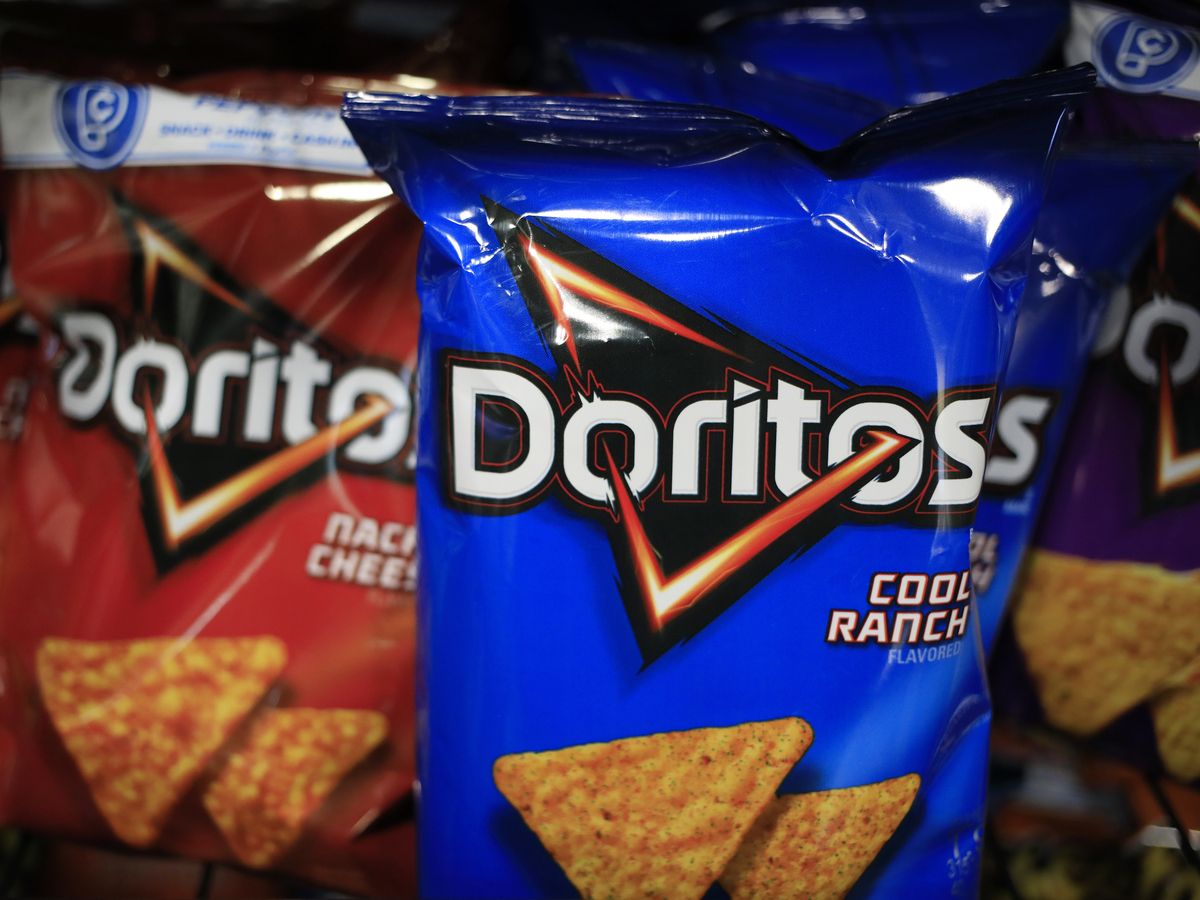
PepsiCo Inc.’s chips prices had gotten too high. Walmart Inc. had been telling the maker of Doritos, Lay’s, Cheetos and many other beloved snacks that was the case for more than a year.
Article content
Executives at PepsiCo knew it, too. Sales at Frito-Lay, the company’s snacks powerhouse, were plunging. Some of its chips cost more than US$7 a bag; at Walmart, Doritos prices had jumped nearly 50 per cent from 2021, according to Attain, which tracks consumer spending data.
Yet, even when Walmart cut Frito-Lay’s shelf space — giving it to its own cheaper, in-house brand and competitors like Takis — price tags didn’t go down.
Finally, in February PepsiCo announced it would slash prices by up to 15 per cent on some salty snacks. By then, Frito-Lay had missed internal revenue targets for two years in a row by over a billion dollars, according to people familiar with the matter.
But now that a plan to bring prices down is in motion, new challenges have emerged that threaten to blunt its impact.
With the war in Iran sending oil prices soaring, consumers under even more economic pressure may not be lured back by PepsiCo shaving less than a dollar off a snack bag. And depending on how long the conflict lasts, higher food and packaging costs could eat into the company’s margins.
Before the war, the price cuts were “probably enough” to lure customers and boost PepsiCo’s revenues, said Nik Modi, co-head of global consumer and retail research at RBC Capital Markets. “But now what?”
A spokesperson for PepsiCo declined to comment on this story.
PepsiCo chief executive Ramon Laguarta said at a conference in February that the company will know by this summer if the cuts are “enough.” Tests in select cities last year generated a “pretty good” boost in volume, he said on a separate call with investors that month. By agreeing to lower prices, the company secured, on average, a double digit increase in shelf space at major retailers like Walmart, Costco and Target. It expects those changes to be in full force by the end of this month, Laguarta said.
The company will be monitoring how much it’s selling and how it’s doing against competitors, but hasn’t publicly disclosed specific target
Executives at PepsiCo had been debating what to do about the pricing issue since at least as far back as 2024, when Frito-Lay’s revenues turned negative, according to people familiar with the matter. Nobody wanted to be responsible for a short-term revenue blow dealt by slashing prices, according to the people, who asked not to be named discussing internal matters. So the company tried anything else that might lure customers: promotions, shrinkflation. None of it worked.
We kept telling you lazy fatties if you want prices to drop, stop fucking buying, cuz these companies were scamming us. But there was always a few smart dumb niggas that would find a way to defend these companies.When Rachel Ferdinando took the helm of the company’s United States foods division at the start of 2025, she decided to do a deep dive into its business, according to a person familiar with the matter. Her findings were clear: Prices had to come down.
Meanwhile, pressures were mounting. Frito-Lay’s revenues, which had risen for 53 quarters in a row — or more than 13 years — were falling. PepsiCo was losing market-share to cheaper private-label brands. And, other packaged food companies, like Conagra Brands Inc. and General Mills Inc. were already lowering their prices.
Meetings with retailers like Walmart, which wanted the snack maker to address concerns about affordability as soon as possible, became tense, according to people familiar with the matter.
At PepsiCo’s headquarters in New York, Laguarta’s mind was on other priorities, too. Americans were increasingly choosing healthier options. Laguarta pushed the company to lean harder into more protein and fibre-rich foods, which tend to cost even more than chips. He was also working on opening a Lay’s-branded restaurant in Spain.
With the company’s market value down more than US$50 billion since 2023, lower prices started showing up in stores at the beginning of this year.
The guiding mantra at PepsiCo’s snacks division had been “Frito-Lay Five Forever.” The goal was to grow Frito-Lay’s revenue by five per cent year after year and, for decades, that’s about how the snack-maker did.
Frito-Lay was PepsiCo’s cash cow, generating money for the beverage division to spend, employees said. Unlike PepsiCo’s soda brands, which have to contend with Coca-Cola’s dominance, Frito-Lay owns the land of salty snacks. It controls nearly 60 per cent of the U.S. market, according to RBC Capital Markets, which gives it more power to set pricing.
During the pandemic — like all food companies — PepsiCo raised prices to manage costs associated with supply chain and labour issues. At first, consumers, flush with stimulus dollars and with little more to do than sit at home and snack, didn’t blink. But what started as modest increases turned into double digit jumps. By the third quarter of 2022, net pricing was up 20 per cent from a year earlier.
Frito-Lay Five Forever was no more: Revenue growth skyrocketed into the double digits for the next two years. Internally, bonuses were flowing, according to people familiar with the matter.
“The Frito business is the jewel of PepsiCo,” Laguarta said on an investor call in early 2023, noting it had the highest margins of any unit within the company. “No matter what happens with the consumer, we’re going to be, I think, the preferred choice.”
When sales started slipping in 2023, some employees raised concerns about prices getting too high and hikes happening too often. But even when revenue started falling, senior managers made clear they didn’t want to go backward on prices, according to people familiar with the matter
Instead, PepsiCo tried other tactics to keep costs down and lure shoppers back. It put fewer chips in bags and offered short-term deals. It unveiled cheaper multi-packs with fewer bags. It also rolled out new versions of snacks without artificial colours, as well as higher-protein and fibre options, hoping to win over the health-conscious crowd.
In both 2023 and 2024, Laguarta predicted Frito-Lay’s volumes would rebound.
“We have been working different tactics to give the consumer what they want and we see that it’s working,” he said on a call in mid-2024.
That year, revenue at Frito-Lay turned negative for the first time in over a decade. By then, the company wasn’t just losing customers but shelf space in stores, including the most coveted displays at the end of aisles. Internally, some employees winced as the prices of some chips surpassed US$7.
Seeing its volume declines, the company should’ve cut prices earlier, said Nicholas Fereday, a food industry analyst. “PepsiCo, like many, assumed consumers would suffer the rises and only now appreciates how important ‘affordability’ is to the typical consumer.”
Now, the message from executives is that PepsiCo is all in on value.
“Consumers have been clear: Affordability has never mattered more,” Ferdinando, the head of PepsiCo’s U.S. Foods division, said at a conference in March. “Trust is built when consumers feel that companies, and big companies especially, understand their reality.”
At a Safeway supermarket in Washington, DC, family-size bags of Doritos and Tostitos in April were selling for as low as US$2.49, if bought in multiples of three.
A party-size bag of restaurant-style Tostitos was still sitting on the shelf for US$7.29.
 arstechnica.com
Following a quarter in which his company delivered record revenue, Cisco CEO Chuck Robbins announced that the company’s latest round of layoffs begins today.
In a blog post yesterday, Robbins was quick to boast that Cisco’s fiscal Q3 2026 earnings saw revenue increase 12 percent year-over-year to $15.8 billion. He told employees that he and the rest of Cisco’s executive leadership team “could not be prouder of the growth you have all delivered for Cisco.”
But that pride could apparently not save the company’s successful employees from unemployment.
“We are making changes today that will result in the reduction of our overall workforce in Q4 by fewer than 4,000 jobs, representing less than 5 percent of our total employee base,” he wrote. “Most notifications will begin on May 14 and continue globally in alignment with applicable local laws and regulations.”
As with many layoffs at tech companies recently, Cisco’s job losses are attributed to the growth of AI. Robbins’ blog noted that companies that “will win in the AI era” need to demonstrate the “focus, urgency, and the discipline to continuously shift investment toward the areas where demand and long-term value creation are strongest.”
“This means making hard decisions—about where we invest, how we’re organized, and how our cost structure reflects the opportunity in front of us,” Cisco’s chief said.
Cisco plans to turn the layoffs into investments in “silicon, optics, security, and in our employees’ use of AI across the company,” according to Robbins.
In its earnings report released on Wednesday, Cisco said it sold $5.3 billion in AI infrastructure from hyperscalers so far this fiscal year. It is now expecting orders for the fiscal year to reach $9 billion, up from $5 billion, and revenue to reach $4 billion instead of $3 billion.
During a call with investors on Wednesday night, Cisco executives discussed the layoffs further, with CFO Mark Patterson saying, “This was really not a savings-driven restructure,” according to a transcript of the call.
“Things are moving incredibly fast right now,” he said. “And this is more realigning from an already strong base, as you’re seeing in our financials, but really realigning resources around silicon, optics, security, and AI. And so being able to move fast, we don’t always have the exact resources that we need going forward in the right places. And so that’s really what this is about versus savings.”
Due to the layoffs, Cisco expects to “recognize up to $1 billion of pre-tax charges with $450 million to be recognized in the Q4 FY ’26 and the remainder during FY ’27,” Patterson added.
“These [layoffs] are building from a position of strength and focusing on the technologies that will accelerate our growth, deliver unmatched innovation to customers and partners, and define our future,” Robbins said on the call.
Bonuses and training for laid-off workers
Robbins’ blog post said that affected workers will receive “pro-rated payment” of fiscal 2026 bonuses. The company also says it will offer services to help laid-off employees find new jobs.
“We will provide support in finding new opportunities, whether internal or external, through Cisco’s placement services—a program that has seen 75 percent of participants discover their next role,” Robbins said. “We are also committed to continued personalized learning and will provide one year of access to all Cisco U courses and certifications, covering AI, security, networking, and more.”
This round of layoffs follows the dismissal of 4,245 employees, or 5 percent of the workforce at the time, in February 2024, and about 6,000 people, or about 7 percent of the workforce, in August 2024. Cisco also attributed the latter layoffs to the need to restructure around AI and security, The Register reported at the time.